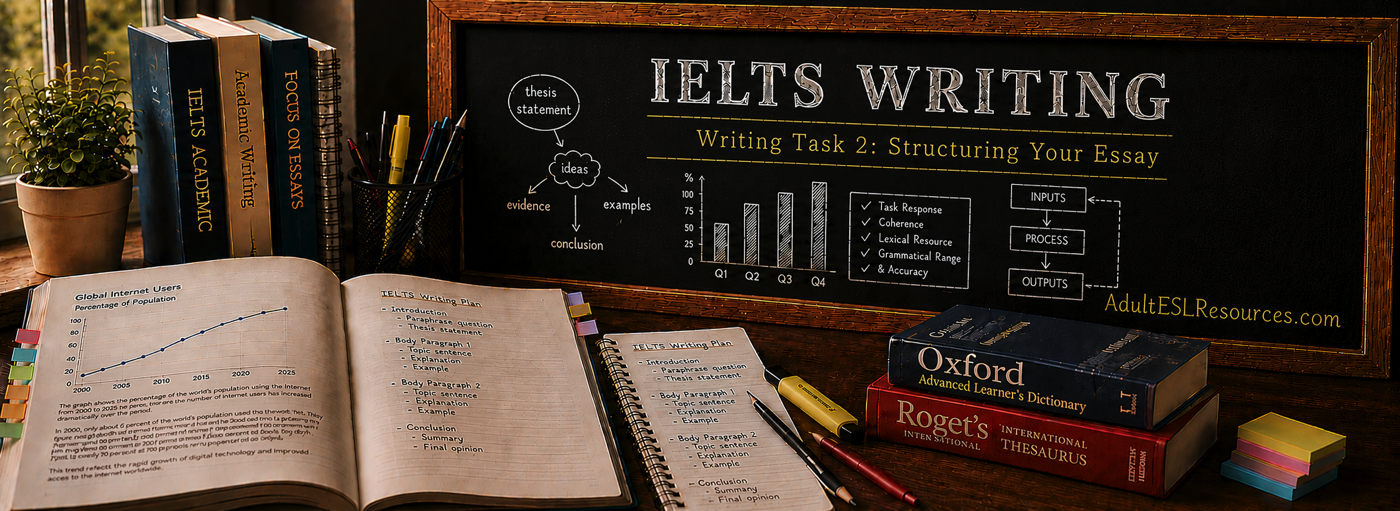
One structure, every question type
Soft. Hard. Soft.
Whatever question type you’re given, a strong Task 2 essay follows the same underlying shape. We call it the OREO framework — an ordinary Oreo cookie is hard, soft, hard. A strong essay is the reverse: soft, hard, soft.
Your introduction should be soft and inviting. Your body paragraphs should be hard — packed with substance, detail and evidence. Your conclusion should soften again, leaving the reader with a gentle close rather than another wall of facts.

The framework
Soft Introduction, Hard Body, Soft Conclusion
Introduction
A soft, inviting opening. Paraphrase the question in your own words and state your position or outline what the essay will cover — general in tone, not packed with detail yet.
Body Paragraphs
Two focused body paragraphs, or three if your plan genuinely needs the space. This is the “hard cookie” — your specific points, reasons and examples belong here.
Conclusion
Soften again. Summarise your position in general terms, without introducing any new facts or arguments at this late stage.
Why “soft” and “hard”
Think of it as tone, not just content.
“Soft” paragraphs are general and inviting — paraphrased ideas, broad statements, a sense of direction. “Hard” paragraphs are where the real substance lives — specific points, concrete reasons, real examples. Save the detail for the middle, and let the outer paragraphs stay lighter.
Seeing the shift
The same idea, at three different levels of detail
Below is one idea — that remote work improves work-life balance — written the way it might appear at each stage of a soft/hard/soft essay.
Worked Example
Soft, Hard, Soft — in practice
Soft (Introduction): Working arrangements have changed considerably in recent years, and many employees now report a better balance between their professional and personal lives as a result.
Hard (Body Paragraph): This is largely because remote employees no longer lose time and energy commuting. A parent who previously spent two hours commuting each day, for example, can now use that time to prepare meals, help with homework, or simply rest before starting work — time that was previously unavailable.
Soft (Conclusion): Overall, the shift toward remote work has, for many employees, meant a noticeably healthier balance between their working and personal lives.
Avoid these
Common structural mistakes
Starting Too Hard
Opening with a specific statistic or detailed example before the reader has any context skips the soft landing an introduction is meant to provide.
Body Paragraphs That Stay Soft
Vague, general statements without specific reasons or examples leave the “hard” middle of the essay feeling just as thin as the introduction.
A Conclusion That Stays Hard
Introducing a brand-new statistic or argument in your final paragraph leaves it unsupported and breaks the soft close the essay needs.
Ready for the next step?
Apply this shape to your specific question type.
This soft/hard/soft shape stays the same across every Task 2 question. What changes is how you plan your position — return to Task 2 to choose your question type.