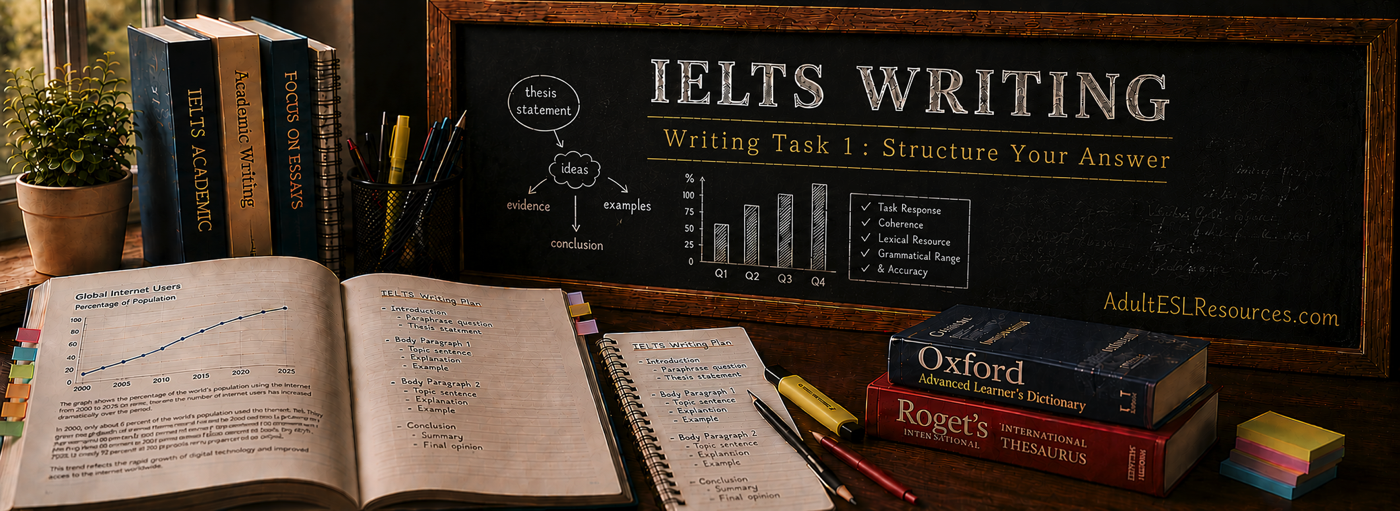
One structure, every visual
Two paragraphs. One clear job each.
No matter which visual type you’re given, a strong Task 1 answer follows the same basic shape: an overview that identifies the significant features, followed by data that supports and explains them.
This structure keeps your answer organised and easy for an examiner to follow, and it prevents the most common Task 1 mistake — describing every single number instead of identifying what actually matters.

The framework
Overview, then data
Strong Task 1 answers are typically organised into two main paragraphs after a brief introduction that restates the task in your own words.
Overview
Identify and summarise the two or three most significant features of the visual — the overall trend, the biggest difference, or the most notable pattern.
Do not include specific numbers here. The overview is about the big picture, not the details.
Data
Support the features you identified in your overview with specific figures, comparisons and details from the visual.
This is where specific numbers, dates and comparisons belong — used to prove the points you already made.
Why this order matters
The overview is often the most valuable paragraph.
Examiners specifically look for a clear overview identifying the main features. A response packed with numbers but no overview — or an overview buried at the end — tends to score lower, even when the data itself is accurate.
Avoid these
Common structural mistakes
Listing Every Number
Describing every single data point in order, without identifying which features are actually significant.
Giving Opinions
Explaining why a trend might have happened or stating a personal view. Task 1 asks you to report, not to speculate or argue.
Skipping the Overview
Jumping straight into data without ever stepping back to summarise the overall pattern.
Ready for the next step?
Apply this structure to your specific visual.
Return to your visual type to see this structure applied to a full worked example, or move on to Task 2 once you’re confident with Task 1.